Reef Fish Spotting Checklist: 20 Indo-Pacific Species and Where to Find Them
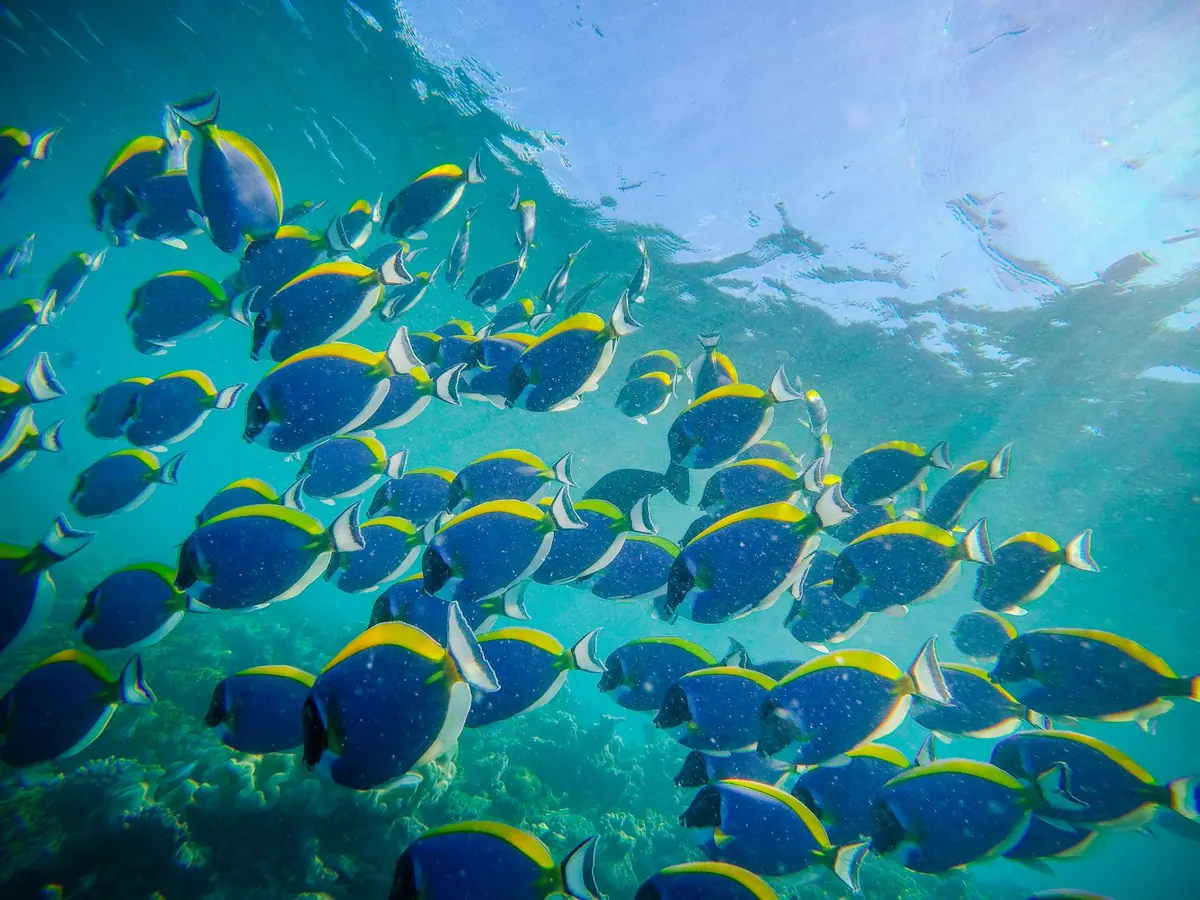
Most reef fish are not scattered at random. Each species keeps to a patch of reef with the right depth, substrate and current, and once you know which patch, you stop finning past everything. This checklist groups twenty Indo-Pacific fish by micro-habitat so you can search deliberately: hovering over sand, working along the crest, or hanging in the blue at the drop-off. All of them are realistic sightings on an ordinary dive or snorkel in the Red Sea, Maldives, Indonesia, Philippines, Palau or on the Great Barrier Reef.
How to read a reef before you get in the water
Almost every reef shares the same rough anatomy, and each zone holds a different cast of characters.
- Sand and rubble — shallow flats, patches between coral heads, and the debris slope below the reef. Look for shapes rather than movement.
- Reef crest and coral heads — the shallow top, often in surge, with branching corals and plenty of light.
- Slope and bommies — the angled reef below the crest, where coral heads sit in current.
- Drop-off and open water — the wall edge, channels and passes, where currents concentrate plankton and predators.
Snorkellers can cover the first two zones well. Divers with a tank can work all four in one dive if the profile is planned sensibly.
On the sand and rubble
This is the zone most people rush. Slow down, hover a metre off the bottom and scan ahead of you.
- Bluespotted ribbontail ray (Taeniura lymma) — shallow sand beside coral heads, often 2–10 m. Check under ledges before you swim over; the electric blue spots give it away.
- Leopard flounder (Bothus pantherinus) — sits tight on sand and rubble, frequently near jetties and seagrass. Look for two eyes peeking out and follow the outline.
- Variegated lizardfish (Synodus variegatus) — perches motionless on its front fins on rubble between coral heads. Easy to miss until it moves.
- Garden eels (Gorgasia and Heteroconger species) — colonies on sandy flats in gentle current. Approach low and slowly or the whole colony disappears into the sand.
- Yellow-saddle goatfish (Parupeneus cyclostomus) — works the sand with its barbels out, often trailing other feeding fish. Juveniles turn up in seagrass.
Along the reef crest and coral heads
Bright, busy and shallow. If you are snorkelling, this is your best zone — but keep your fins off the coral.
- Blue-green chromis (Chromis viridis) — clouds of them above branching Acropora, dropping between the branches when alarmed. Common in lagoons from about 1 m down.
- Three-spot dascyllus (Dascyllus trimaculatus) — the same branching coral, and juveniles often shelter with anemonefish. Dark with white spots when young.
- Anemonefish (Amphiprion ocellaris and A. clarkii) — find the host anemone and the fish will be within a metre of it. Check reef flats and crest edges.
- Raccoon butterflyfish (Chaetodon lunula) — crest and reef flat over coral and rubble, usually in pairs. Its night colouration is noticeably duller.
- Convict surgeonfish (Acanthurus triostegus) — shallow crest in surge, grazing algae in tight schools. Zebra stripes, no confusion.
On the slope, bommies and current lines
Drop a few metres below the crest and the fish change. Position yourself up-current of a coral head and let the residents come to you.
- Lyretail anthias (Pseudanthias squamipinnis) — current-swept slopes, feeding in loose clouds. Males are the larger, orange ones with extended fins.
- Moorish idol (Zanclus cornutus) — crest edges and reef flats, often in pairs. Wary and quick to turn away, so approach obliquely.
- Emperor angelfish (Pomacanthus imperator) — slopes with rubble and sponge, roughly 3–25 m. The ringed juvenile looks like a different species entirely.
- Titan triggerfish (Balistoides viridescens) — rubble and sand on the slope. In warmer months they defend nesting patches and will chase; move away horizontally, not upwards into their territory.
- Humphead wrasse (Cheilinus undulatus) — steep slopes and passes, cruising slowly. Protected in many destinations, so admire from a distance and never chase.
At the drop-off and in open water
Look out, not down. Currents here feed the whole reef, and the bigger animals use the edge as a highway.
- Fusiliers (Caesio and Pterocaesio species) — midwater above drop-offs in streaming schools. Blue bodies, yellow tails, constant motion.
- Bigeye trevally (Caranx sexfasciatus) — channel mouths and drop-off edges, patrolling in current, most active around dawn and dusk.
- Grey reef shark (Carcharhinus amblyrhynchos) — the classic drop-off silhouette, cruising the edge and passes. Steady swimming, no interest in divers.
- Whitetip reef shark (Triaenodon obesus) — rests under overhangs and in caves during the day, often on sand. Shine a torch gently and keep your distance.
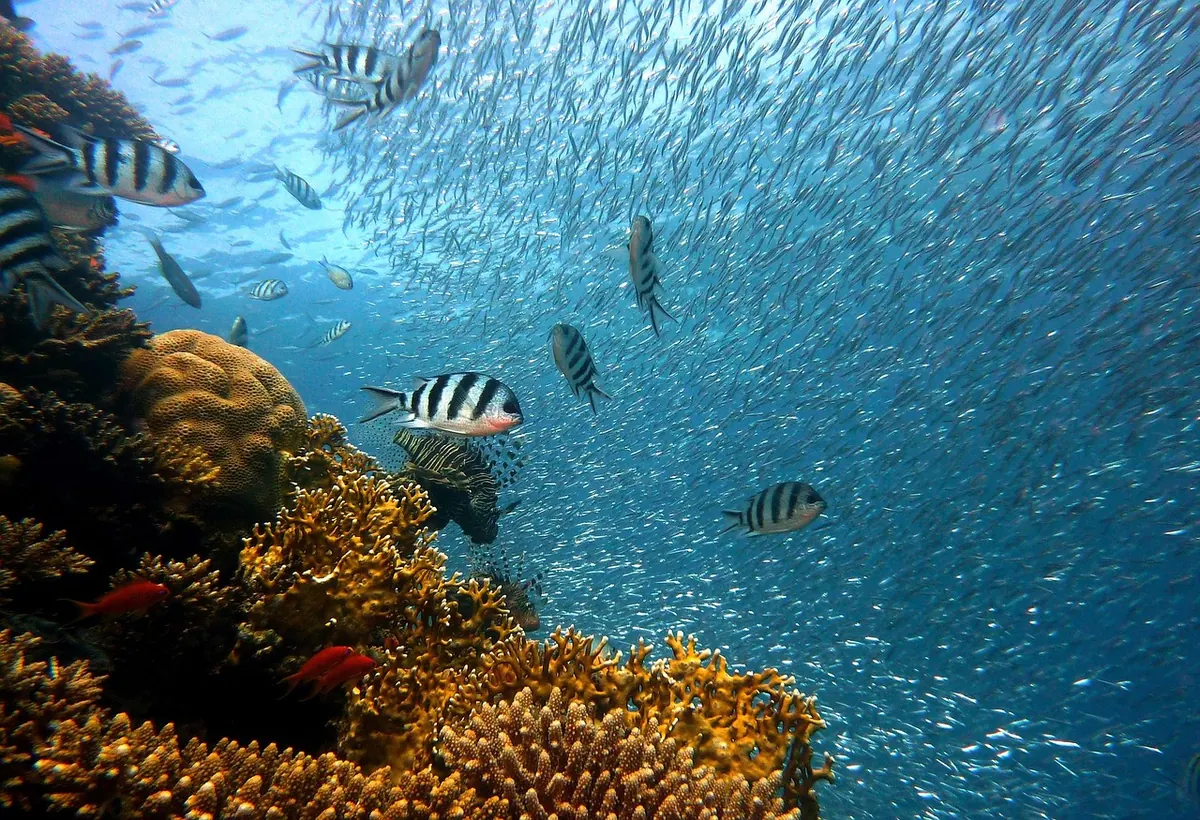
- Redtooth triggerfish (Odonus niger) — gathers in clouds on current-swept drop-offs, picking plankton from the water. Watch them hold position against the flow.
Making the checklist work for you
Twenty species in one dive is ambitious, and you do not need to tick them all. The point is to know where to look, so you spend your air on fish rather than searching.
- Brief the dive by zone: sand first, crest on the way back, drop-off only if depth and gas allow.
- Write depth and habitat next to each tick in your log — patterns emerge over a week of diving.
- Give each zone five minutes of near-stillness. Most sand and rubble species appear only after you stop moving.
- Use a torch under ledges, but only if you are trained to use it without disturbing what is resting there.
- Log the ones you missed. A second look at the same site at a different tide often completes the list.
Keep your buoyancy tidy, never touch the substrate, and stay a fin's length from anything you want a
Photo: wewe yang / Pexels